
The Mistake Almost Everyone Makes First
When a garage door won't move on a frigid morning, the instinct is to hit the opener button again — and again, and maybe a third time for good measure. It's the path of least resistance: you're in a hurry, the remote is right there, and surely one more try will break it loose. But if the door is frozen to the slab or driveway apron, that repeated button-mashing is exactly how a simple ice problem turns into a torn weatherseal, a bent track, a stripped drive gear, or a burned-out opener motor. The opener is built to move a door that's merely heavy, not one that's glued to the concrete by a sheet of ice. Before you touch the remote again, it helps to know what's actually going on.
What a Frozen or Sluggish Door Looks Like
Not every cold-weather garage door problem looks the same, and the symptoms point to different causes:
- The opener hums or the motor runs, but the door doesn't move at all.
- You can see a thin line of ice where the bottom weatherseal meets the ground.
- The door opens, but noticeably slower than usual, like it's dragging.
- The opener stalls partway up, or reverses back down before it fully closes.
- The door feels heavier to lift by hand than it did in warmer months.
Matching the symptom to the cause is the difference between a five-minute fix and a repair bill you didn't need.
Cause #1: Ice Bonding the Door to the Ground
This is the first thing worth checking, because it's the most common cause after a hard freeze — and the one most likely to get forced rather than fixed. Melted snow, rain, or condensation runs under the bottom seal overnight and refreezes, essentially gluing the rubber to the concrete. In Frankfort's winters, where temperatures swing from above freezing one afternoon to well below overnight, this cycle repeats often, especially on driveways treated with salt that holds extra moisture.
The fix: Don't pry the door with a tool, and don't force it with the opener. Use warm, not boiling, water along the seal line to loosen the ice, or a plastic scraper to gently break the bond at the edges. Once it's free, disengage the opener and lift the door by hand to confirm it moves smoothly before running the motor again.
Cause #2: Lubricant That's Thickened in the Cold
If the door isn't frozen to the ground but still feels sluggish, the next thing a technician checks is the lubricant on the rollers, hinges, and tracks. Many all-purpose greases and household oils thicken significantly in cold temperatures, turning what should be a smooth glide into a slow, strained crawl. This is especially noticeable after the first real cold snap of the season, when summer-applied lubricant hasn't been refreshed.
The fix: A silicone-based garage door lubricant applied to the roller stems, hinges, and track rails restores smooth movement in cold weather better than general-purpose grease, which stiffens and attracts grit.
Cause #3: Springs Under More Strain Than Usual
Cold metal is less forgiving metal. Torsion and extension springs don't change their tension dramatically with temperature, but cold makes the steel more brittle, and a spring that was already near the end of its life is far more likely to show it in winter than in July. A door that's noticeably heavier to lift by hand, or an opener that strains and stalls, often points here.
The fix: This isn't a DIY adjustment. A technician checks spring tension and condition, and if a spring is worn, cracked, or stretched beyond spec, it gets replaced as a set, because the other spring on the same door is usually close behind.
Cause #4: Opener Force Settings Fighting the Cold
If the door seems to work but keeps reversing or stopping short of fully closing, the opener's force and limit settings may be miscalibrated for the extra resistance cold weather adds — stiffer lubricant, a heavier door, a seal that's slightly stuck. The opener's safety sensors read that resistance as an obstruction and stop or reverse the door to protect against injury.
The fix: After the mechanical issues above are addressed, a technician rechecks and resets the force and limit settings so the opener isn't fighting the door all winter.
When to Call Frankfort Overhead Door Co
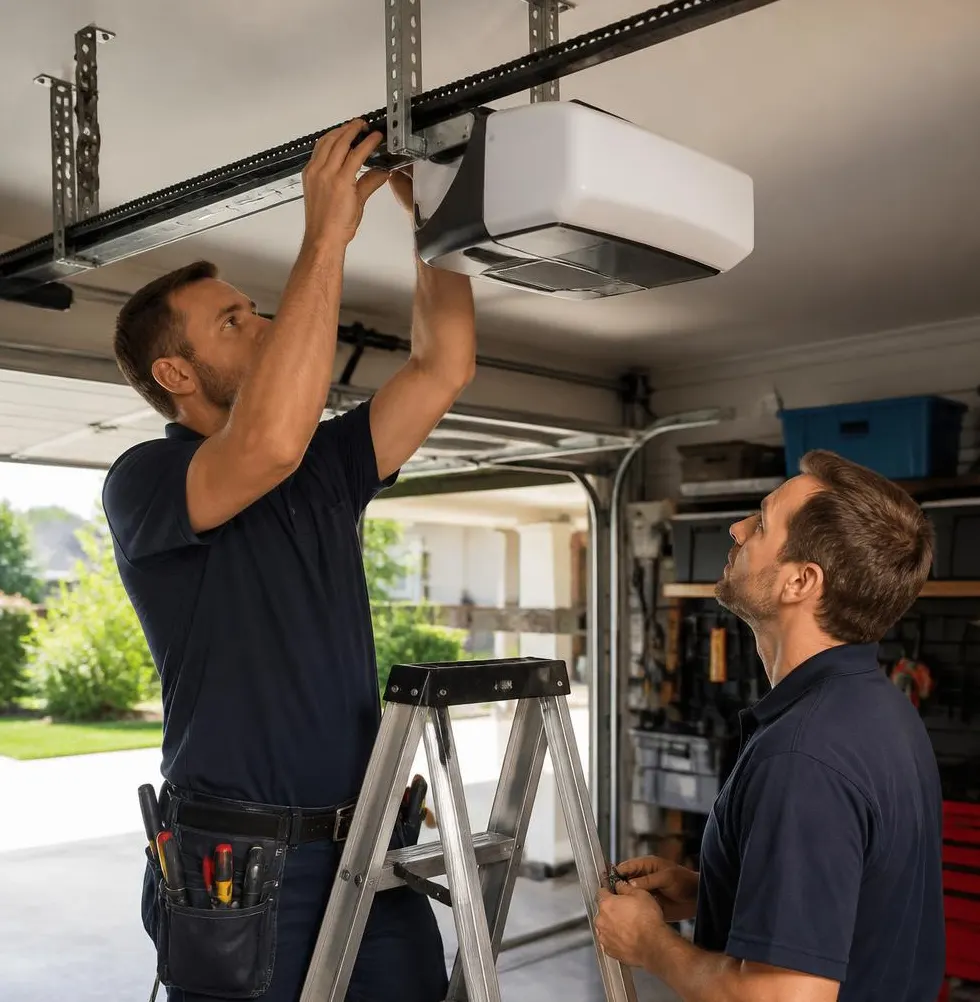
If warm water and a fresh coat of lubricant don't solve it, or if the door feels heavy, uneven, or the opener keeps reversing, it's time to call. Our Garage Door Repair technicians check the whole system in the order above so you're not guessing, and if a spring has gone brittle or stretched, our Spring Replacement service gets it swapped out safely, as a matched pair, before it fails on a morning you really need the door to open.
Don't Fight Your Garage Door All Winter
A door that sticks, drags, or stalls in cold weather usually has a straightforward explanation, but forcing it rarely ends well. If your garage door is giving you trouble this winter, call Frankfort Overhead Door Co. We serve Frankfort, Lexington, Georgetown, Lawrenceburg, Versailles, Shelbyville, Midway, and Nicholasville, and we're ready to get your door moving smoothly again before the next cold snap hits.